Recall that Ricardian Trade Theory implies that trade could benefit everyone.
Two main reasons why trade affects on the income distribution:
- Industries differ in factors of production they demand (+ factor endowment) recall the HO model (Heckscher-Ohlin Model )
- Resources can’t move immediately ⇒ that’s why we would introduce the Specific-Factors Model.
Comparison between Heckscher-Ohlin Model and Specific-Factors Model
| HO model | SF Model |
|---|---|
| Factors are able to move between countries | Not all factors are mobile |
| Long-Run model | Short-Run model |
Setting
- 2 countries
- 2-Sector: Cheese () and Wine ()
- 3-Factor: Labour (), Capital (), and Land ()
- Difference: in Heckscher-Ohlin Model,
- is used in both sectors and mobile across sectors
- is specific to C-production
- is specific to W-production
- Factor price: wage (), rent for capital (), rent for land ()
We also want to know who are the “winners” and “losers” in the trade.
Model
Home
Equilibrium before trade
- Recall the intercept term between the utility curve and the Indifference Curve
- and is specific factors, while can be used in both sectors. So the problem becomes the allocation problem of .
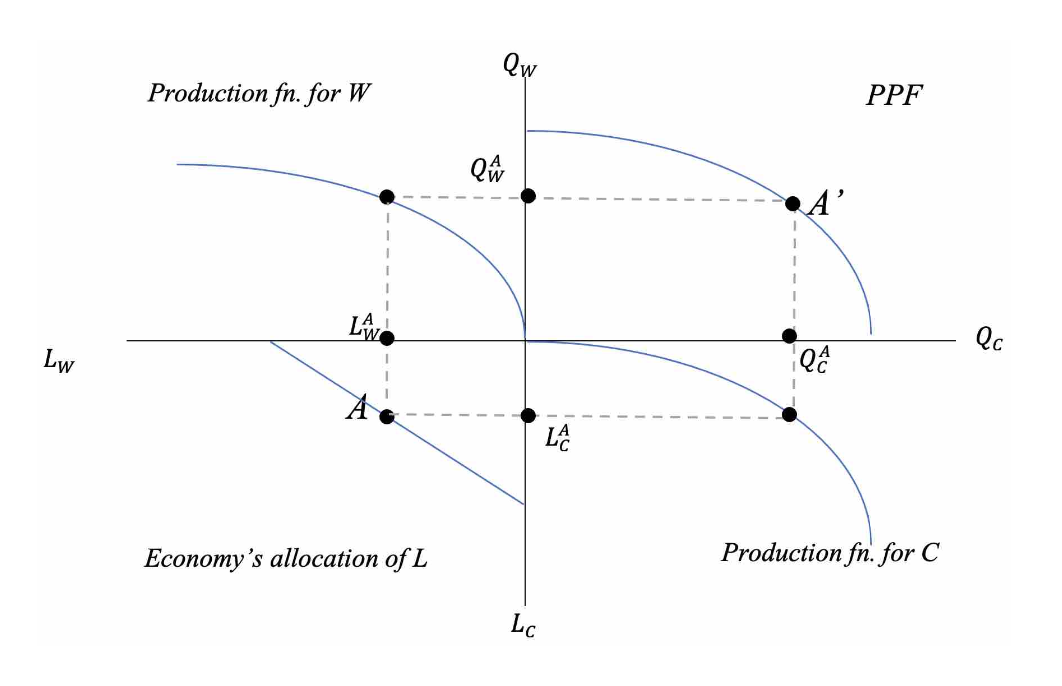
From O, if we goes down, that means we allocate more labors in the cheese industry, if we go left, that means we allocate more labors in the wine industry.
In the competitive market, and
Changes in Factor Endowment
Workers
Both and increase
The welfare of workers increase
Capital owners
decreases (Assume ) and thus decreases.
Equilibrium before trade
When countries open their markets…
changes as a results of trade
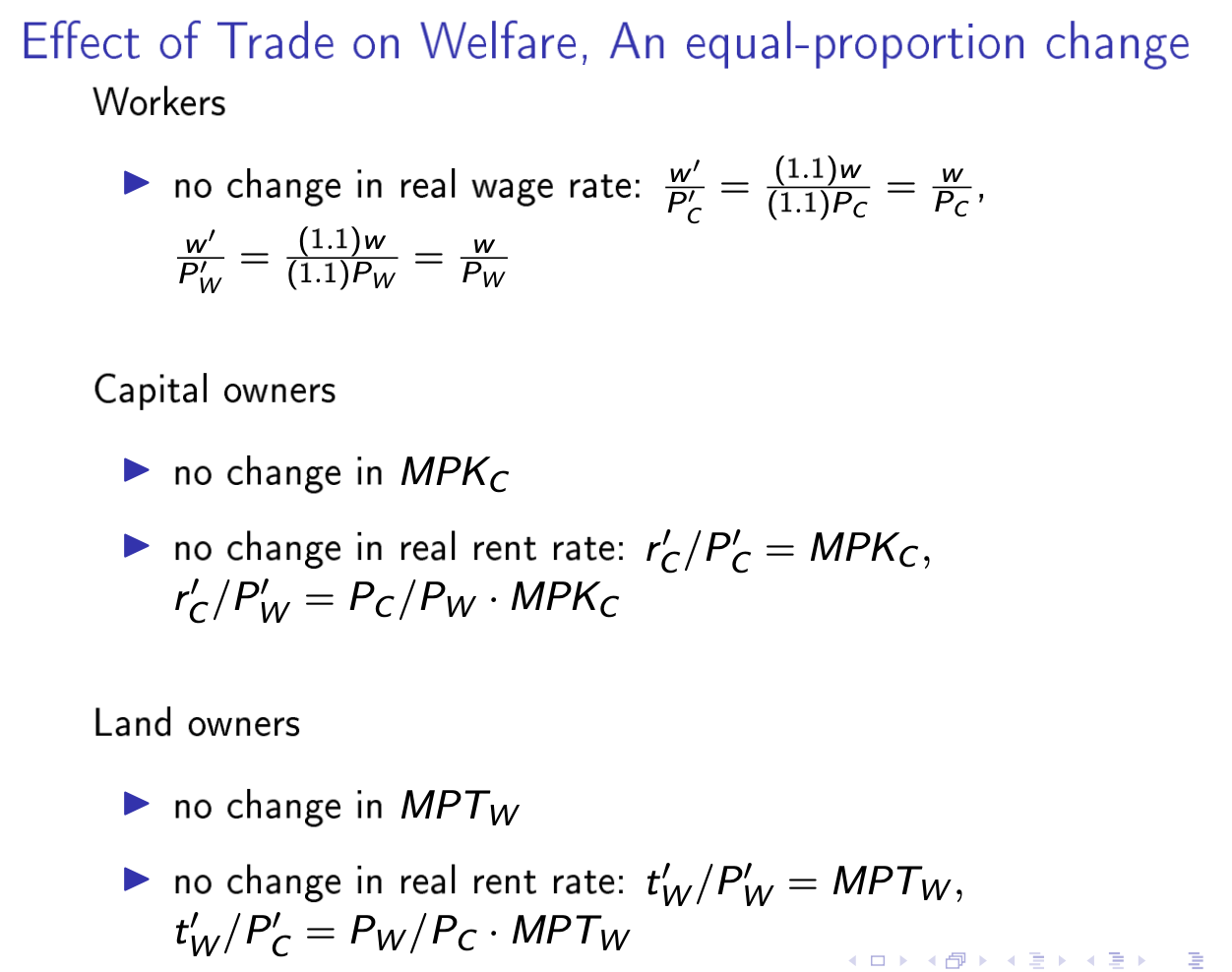
Compare:
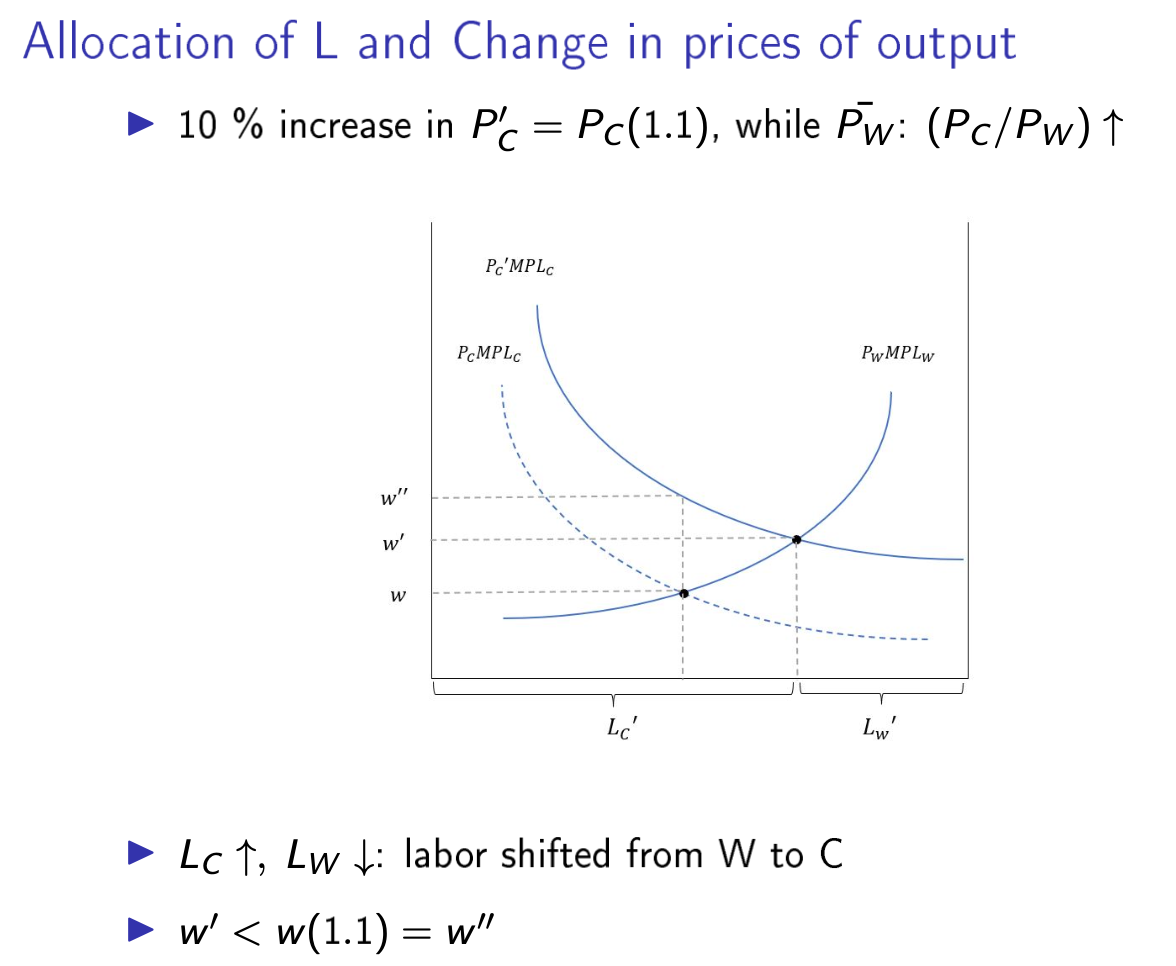
- No change in
- No change in real rent rate: ,