We first assume
使用对数的原因(个人理解):因为取对数可以很好的把两个 part, 和 分割开来,这样可以让计算更加简介,与此同时也不需要去管 的变形,因为求导只求极限的
: Consumption when young
: Consumption when old
: the importance of
: income when young
: income when old
: saving
: interest rate
2-period model
又可以称为跨期预算收束,see Inter-temporal Budget Constraint
This is called the 2-period model
Since
求导之后可以得到F.O.C
Note:
- affects
- If will all increase.
- If will increase, but will decrease, why?
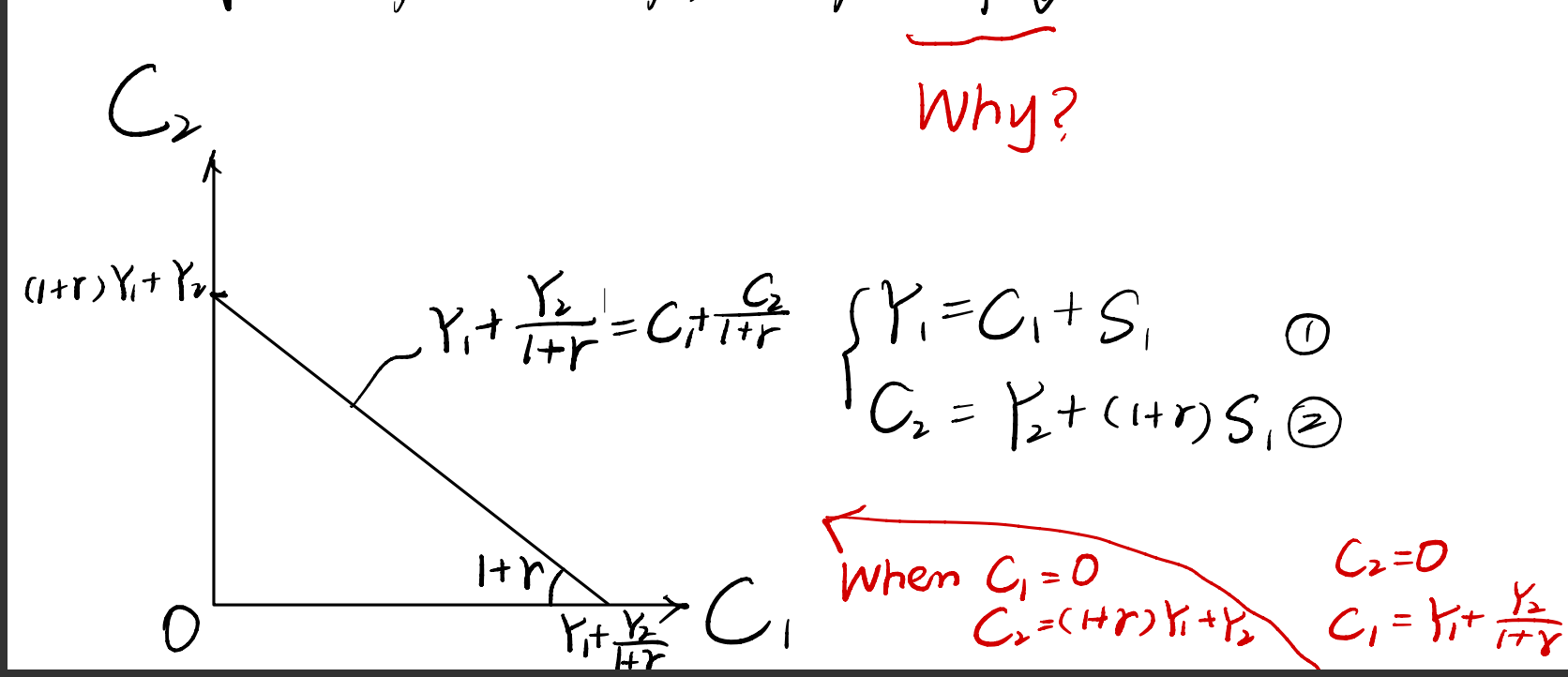
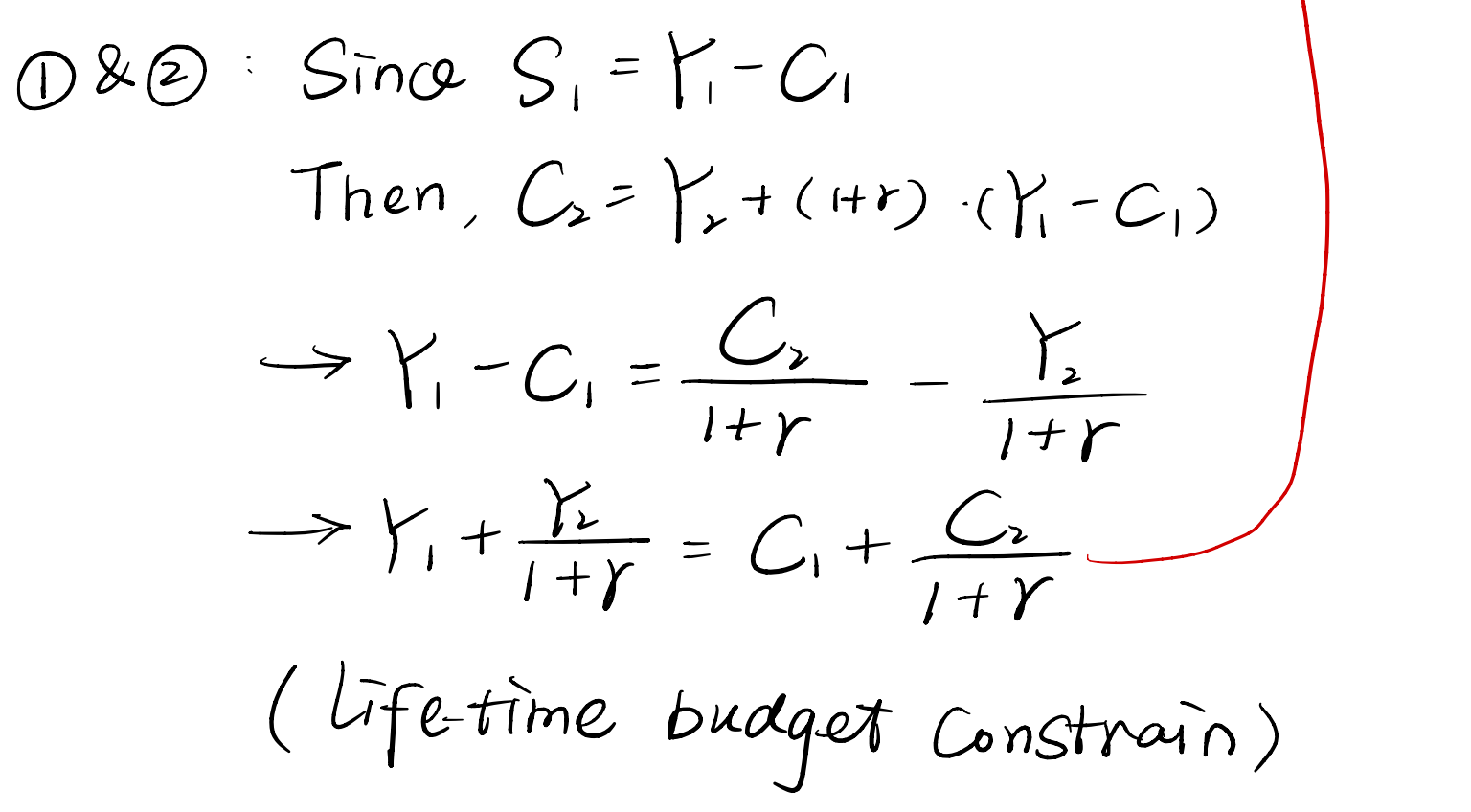
So we have to come to a knowledge that is called the Life-time budget constraint
And using the methods of Endowment, we can test whether it is a borrower or a saver.
The Changes
Different changes could lead different changes in Equilibruim and Endowment
The basic variables could be seperated as:
- Changes in income and
- Changes in interest rate
And the changes in interest rate can then be defined as Subsitution Effect and Income Effect
The first situation could be very simple, because you just need to calculate again with the new value, but if we change the interest rate, it could be “interesting”.
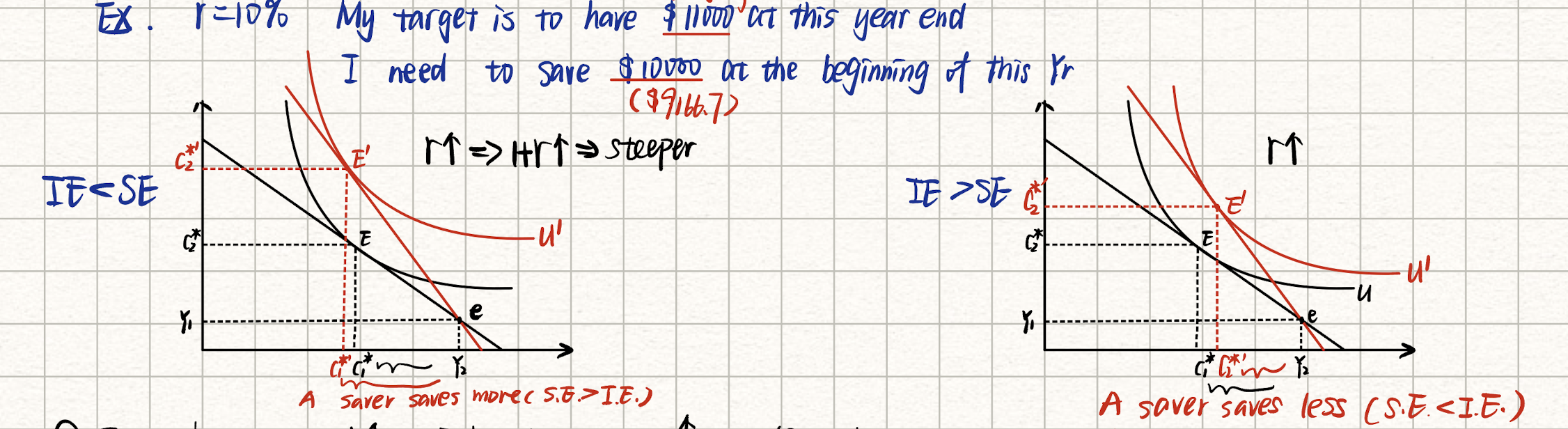
Recall the diagram of Life-time budget constraint, the slope of the curve is , so that if we change the interest rate, the slope of the curve changes,
For a saver:
Think in Subsitution Effect and Income Effect,
For a borrower
The only thing need to do is to save more. Because when increases, then interest payment increases, it could suffer a loss, so to borrow less (save more)
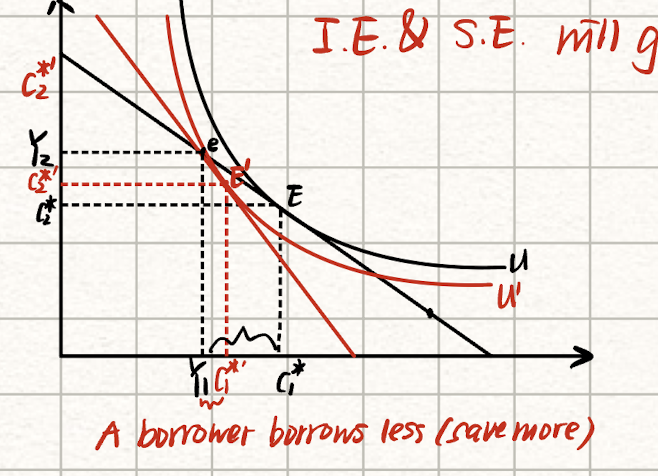
IE and SE would leed to same direction for a borrower
Summary
| As increases | Income Effect | Subtitution Effect |
|---|---|---|
| Saver | reduce saving | increase saving |
| Borrower | increase saving (by borrow less) | increase saving |