Related Topics
-
p9 some fields are volatile, some are not
-
p12 Annual review is best to explore before starting a new area
-
p14 Lucas’ diversification argument
- economy is composed of a set production entities, like factories, firms…
- only productivity shocks
- entity is subject to idiosyncratic output , these shocks are micro shocks
- Summing up, they become the GDP.
- What’s the GDP volatility in this economy? p15 (double check the equation)
-
p17 Granular shocks
-
p22 Large firms are more important, right tail is fat. (Pareto Distribution)
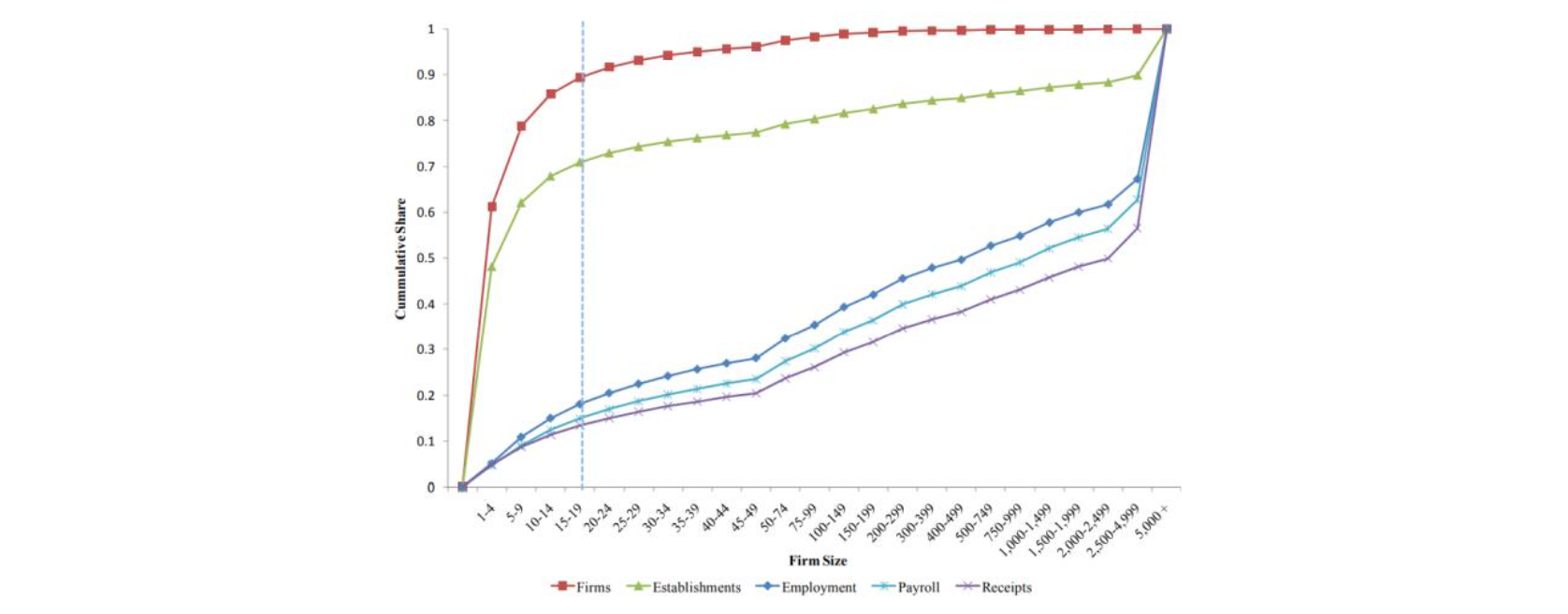
- Indeed small firms do not matter a lot in Economic Growth
-
p25 whether is even less than .
-
p36: The Domar weight is added up
- competitive firms/industries.
- The only assumption we need is the Constant Return to Scale.
- Start from social planners. Use market equilibrium to derive the market prices… And then we still use the view from household, firms, like usual.
- The Welfare Theorem guarantees that planners problem equals decentralized equilibrium.
- Use Envelope Theorem again here.
- Euler’s homogeneous function theorem p41
- Hulten’s Theorem p42
- The of decrease in Walmart is equivalent to of decreasing in a electricity sector. But it’s quite different when shutting down.